Here's the uncomfortable truth about selling gold: the sellers who get shortchanged almost never know it. There's no alarm, no obvious scam moment — just a smiling buyer, a quick number, and a handshake. The tricks that cost you real money are quiet ones, and they work precisely because most people sell gold only once or twice in their lives.
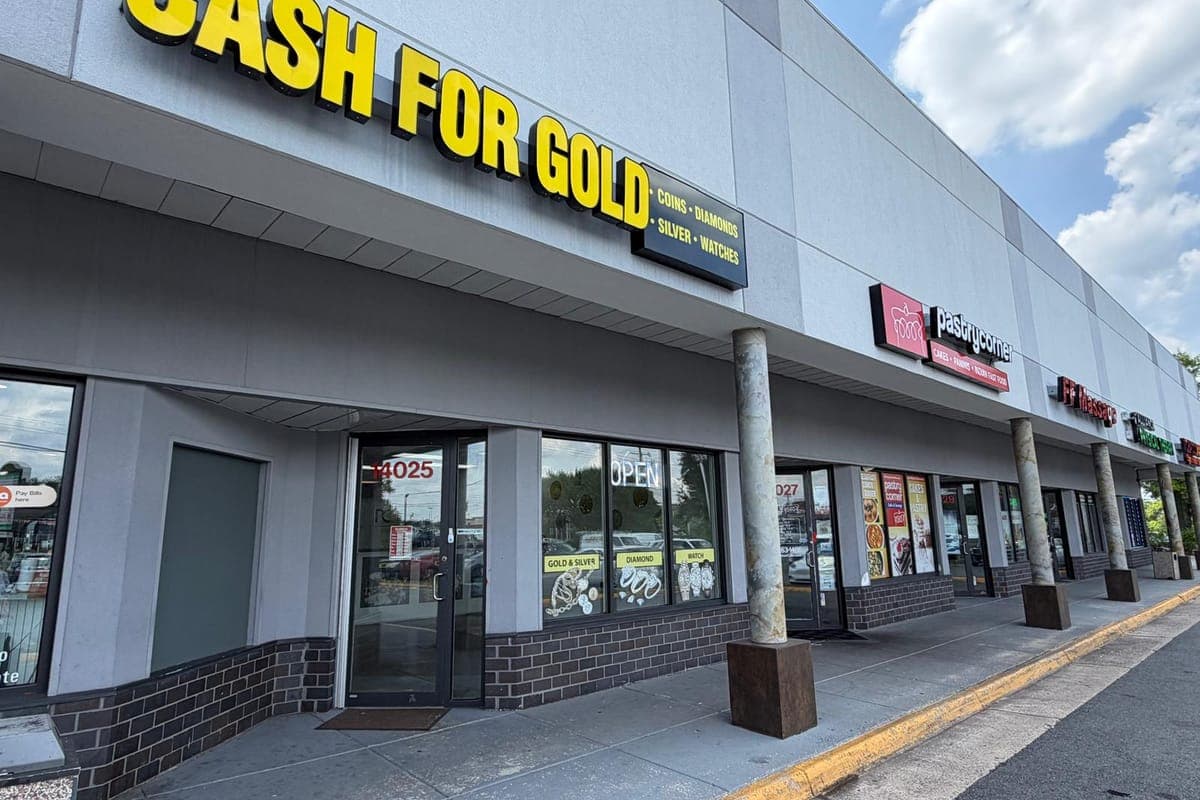
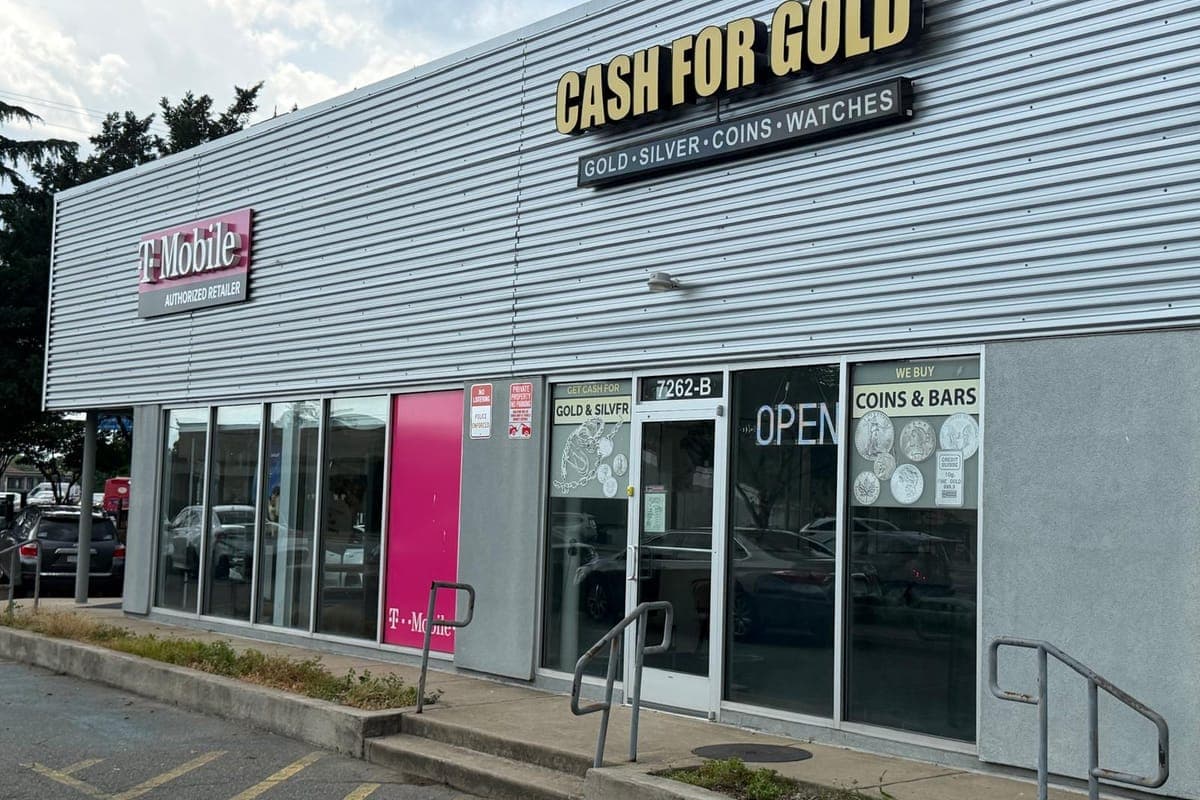
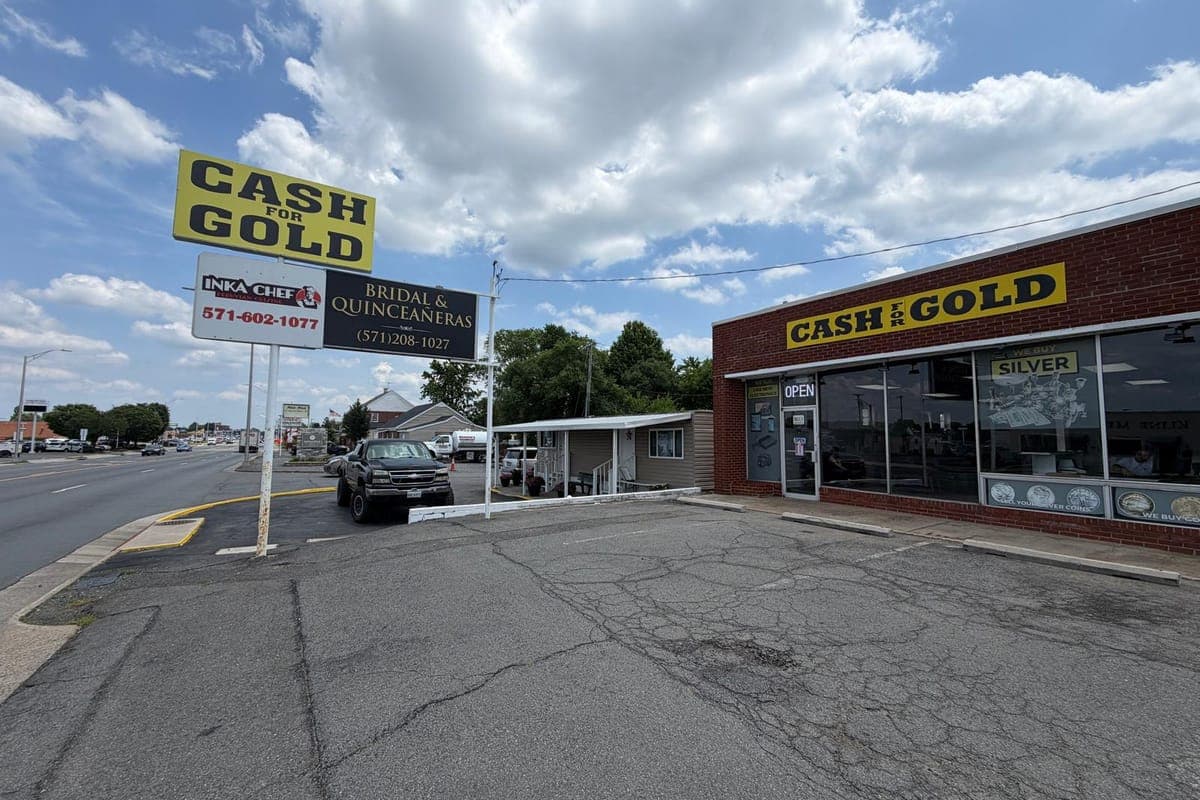
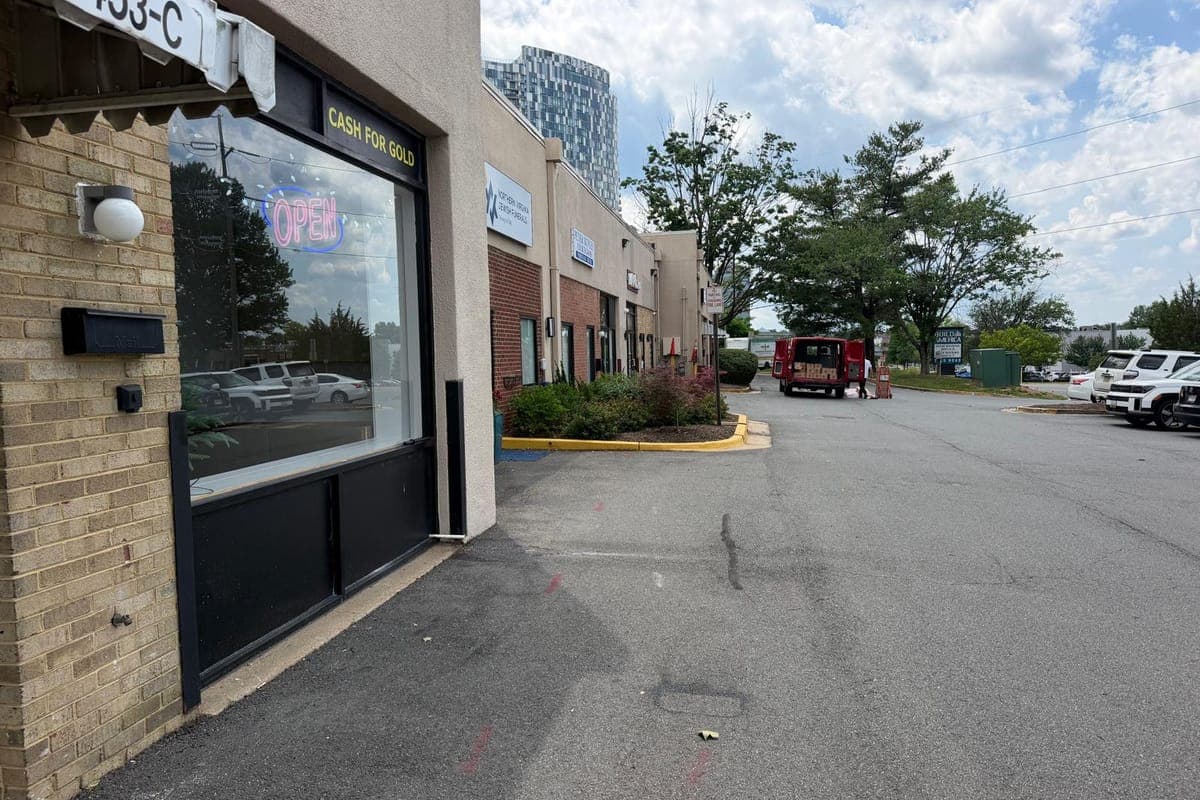
We buy gold and silver every day at our four Northern Virginia stores, and we'd rather you walk in informed. So here's the insider list — the nine red flags that should make you pause, no matter whose counter you're standing at. Ours included.
The 9 red flags
1. The appraisal happens where you can't see it
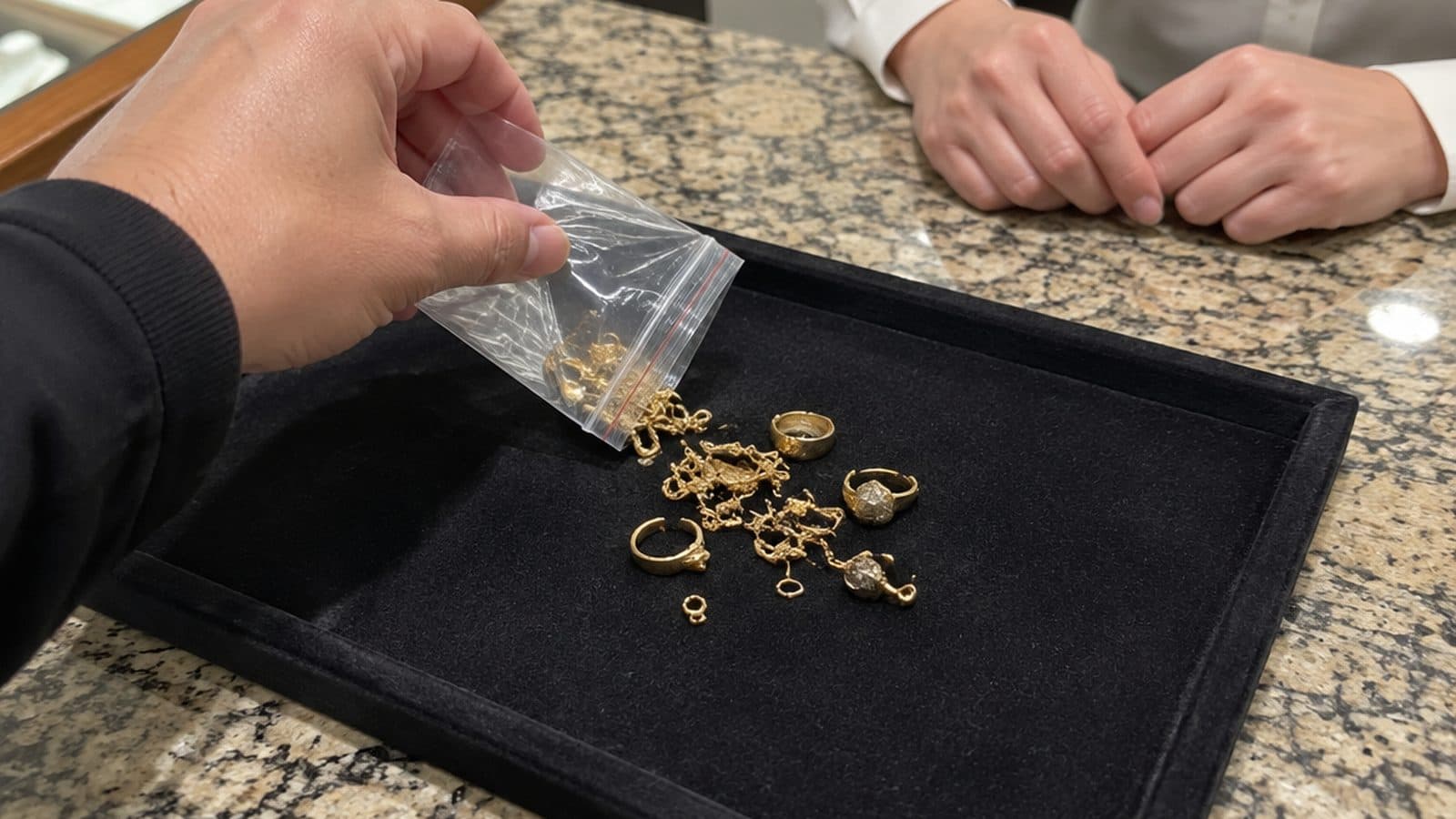
If a buyer takes your jewelry "to the back" to test and weigh it, that's the single biggest red flag in this business. Once your items leave your sight, you can't verify what was tested, what was weighed, or whether the piece that comes back is even yours. A legitimate buyer tests and weighs everything in front of you and explains what they're doing. If you're curious what that should look like step by step, we've written up what a transparent appraisal looks like from start to finish.
2. One vague number for the whole pile
"I'll give you $400 for all of it." For what, exactly? A 10K class ring, a 14K bracelet, and an 18K chain have very different gold content — and lumping them together is how weak offers hide. Sterling silver mixed in makes it worse. Insist on an itemized breakdown: each piece's karat, its weight, and the price per gram. If the buyer won't break it down, they're counting on you not to do the math. This matters even more if you're selling silver alongside gold, because silver's per-gram value is far lower and easy to blur into a bulk quote.
3. The pennyweight switch
This is the classic. Gold is commonly weighed in grams or in pennyweights (dwt) — and one pennyweight equals about 1.555 grams. A dishonest buyer weighs your gold in pennyweights but quotes a per-gram price, or shuffles the units on the paperwork so the numbers look bigger than they are. The defense is simple: ask which unit they're using, and confirm the weight and the price are in the same unit. If the units change mid-conversation, walk.
4. The scale is hidden, tilted, or uncertified
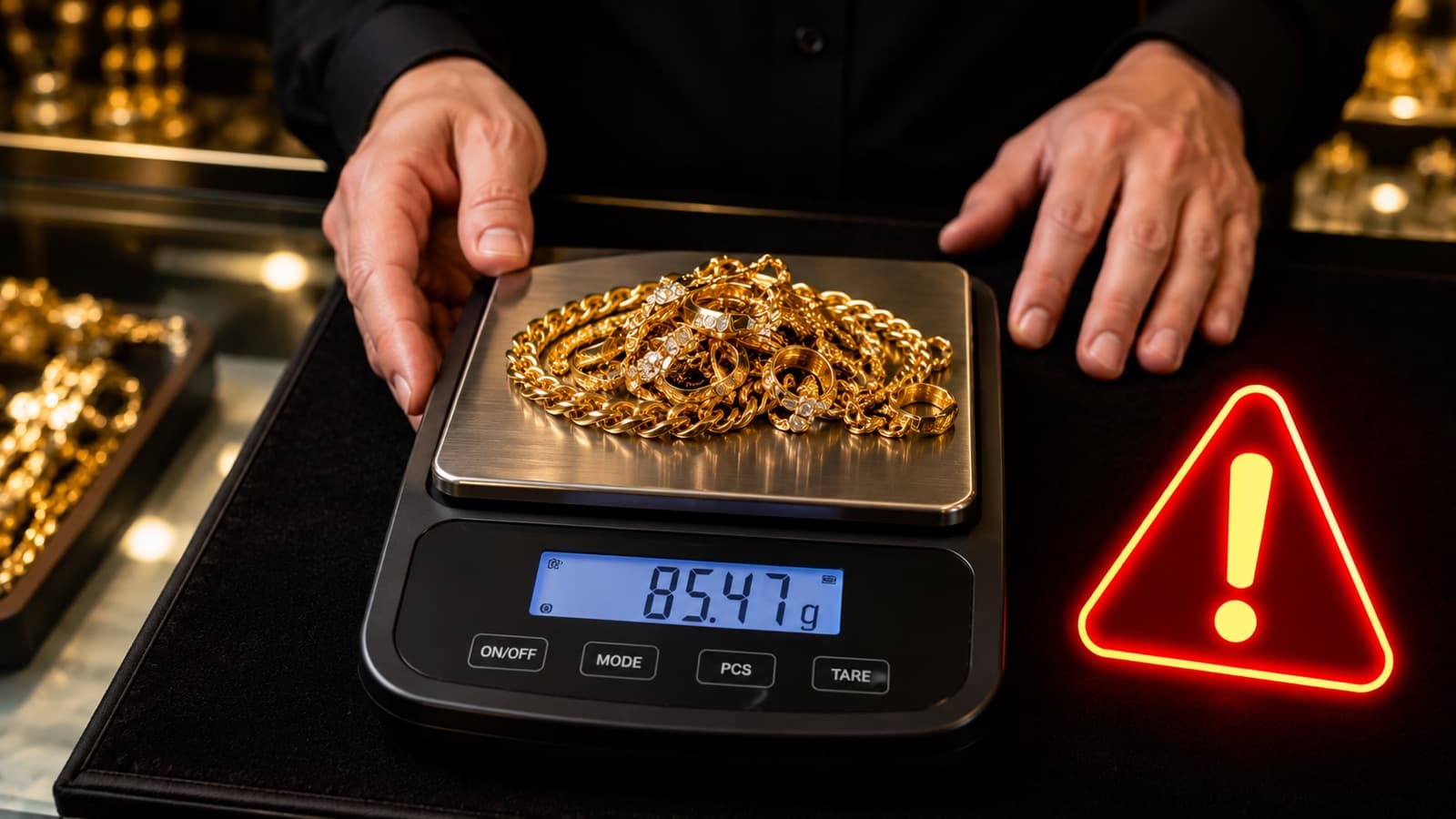
In Virginia, commercial scales are supposed to be inspected and certified — look for the inspection seal. A scale you can't see, can't read, or that sits behind the counter facing away from you is a problem. So is a buyer who "eyeballs" weight or rounds down casually. At our counters the scale is calibrated, certified, and turned toward you, because the weight is half the equation and you deserve to watch it happen.
5. The hotel ballroom "buying event"
Traveling pop-up buyers rent a hotel conference room, blanket the area with ads, buy aggressively for a weekend, and leave. The pressure is built in: "this offer is only good today," because they're only there today. If something goes wrong — a miscount, a dispute, a piece that turns out to be worth far more — there's no storefront to return to. A buyer with a permanent local address has a reputation to protect. A buyer with a rented ballroom doesn't.
6. Mail-in kits: you lose possession before you hear a price
Mail-in gold services flip the entire power dynamic. You ship your items sight-unseen, wait, and then receive an offer — after your gold is already in their hands. Declining often means waiting again for return shipping and hoping everything comes back. Some services are legitimate, but structurally you've given up your leverage and your possession before a single number is discussed. In person, you keep your items in hand until the moment you accept. That's not a perk; it should be the baseline.
7. No ID, no receipt, no paper trail
Here's a counterintuitive one: a buyer who doesn't ask for your ID is the red flag. Virginia law requires precious-metals buyers to record a government-issued photo ID from every seller (18+). A buyer skipping that step is skipping the law — and if they'll cut that corner, imagine the corners you can't see. Legitimate buyers also hand you an itemized receipt. No paperwork means no recourse.
8. You only got one offer
Not a scam — just the most expensive mistake on this list. Offers for identical gold can vary dramatically between buyers because everyone's payout percentage against the spot price is different. Getting two or three quotes takes an afternoon and is the single highest-leverage thing you can do. We've put together a guide on how to compare buyers properly, and yes — we say that knowing you might compare us. Free, no-obligation appraisals exist for exactly this reason. Use them.
9. Scrapping a piece that's worth more than its weight
Gold content is the starting point, not the ceiling. A signed designer piece, an antique with intact patina, or a collectible coin can be worth well above its gold content — and a scrap-only buyer will happily pay you a scrap rate for it. Related trap: aggressively polishing an antique before selling can destroy the patina collectors pay for. If you suspect a piece has value beyond weight, say so and ask how it's being priced. Our guide to getting the most for your gold covers when weight-based selling makes sense and when it doesn't.
Key takeaway: Every one of these red flags is defeated by the same three demands — test and weigh it in front of me, itemize it by karat and unit, and let me hold my items until I say yes. Any buyer who resists any of those three has told you everything you need to know.
Your 5-minute pre-sale checklist
- Sort your items by karat (check the stamps: 10K, 14K, 18K, 925 for sterling) so nothing gets bulk-quoted.
- Weigh them at home on a kitchen scale in grams — approximate is fine; you just need a sanity check.
- Look up the live spot price the day you sell, so you know the ballpark ceiling.
- Set aside anything signed, antique, or collectible — and don't clean it.
- Bring your government photo ID (required by Virginia law; sellers must be 18+).
- Decide your walk-away number before anyone quotes you.
If you're still weighing the decision itself, we've also covered whether it's worth selling in the first place — sometimes holding is the right call, and a good buyer will tell you that too.
What the fair version looks like
None of this is meant to scare you off. Selling gold in Northern Virginia is straightforward when the buyer works in the open — and now you know exactly what "in the open" means: items tested and weighed on a calibrated scale in front of you, an offer built from the live spot price with a clear karat-by-karat breakdown, your items staying in your possession until you accept, and instant payout the same visit if you do.
That's how we run every appraisal at Cash for Gold VA — it's a big part of why we hold a 4.9-star Google rating across 500+ reviews as a transparent buyer in Northern Virginia. Bring this article with you if you like. We mean that literally.
You'll find all four stores — Annandale, Chantilly, Manassas, and Vienna / Tysons — with addresses, hours (or booking details), and phone numbers on the store cards just below and on our locations page. Appraisals are free and no-obligation (Vienna / Tysons by appointment) — come in with questions, leave with answers, and only sell if the number earns it.