A parent's jewelry box or a grandfather's coin collection rarely arrives with instructions. Most families in this position have the same three worries: they don't know what any of it is, they don't want to be taken advantage of, and they don't want to sell the one piece they'll regret. This guide walks through it in order, so you can decide what to keep, what to sell, and how to get a fair price for the rest.
The short version: don't clean anything, don't mail anything, keep the collection together until someone who knows what they're looking at has seen all of it, and expect a resale offer to be lower than any insurance appraisal you find in the box. The details follow.
Step 1: Slow down, and don't clean anything
There is almost never a reason to sell in the first week. Precious metal doesn't spoil. What does cause losses is acting too fast:
- Don't clean or polish. Collectors pay for original surfaces, so cleaning a coin can lower its value, and the same goes for the patina on antique jewelry and silver.
- Don't pull coins out of holders, albums, or sealed cases. The packaging is often part of the value.
- Don't split the collection up yet. A matched set, a signed piece, or a single rare coin is easy to miss once things have been divided into piles on three kitchen tables.
- Keep the paperwork with the pieces. Old appraisals, receipts, grading certificates, diamond reports, and original boxes all help.
- Don't mail it to a buyer you can't see. With a one-of-a-kind family collection, you want to be in the room when it is tested.
Step 2: Make sure the right person is selling
This part is not legal advice, but it prevents most family disputes.
- If the estate is still being settled, the person with authority over estate property is the executor or administrator. In Virginia, an executor cannot act until they have qualified before the Circuit Court clerk. If that's you, keep your certificate of qualification handy.
- If the pieces have already been distributed to you, they are yours to keep or sell.
- For small estates, Virginia has a simplified affidavit process for estates that do not exceed $75,000, with conditions. The clerk's office or the estate's attorney can tell you whether it applies.
- If several heirs share the collection, agree in writing, even by text, on who is taking it in and how the proceeds will be split, before anyone sells anything.
A buyer is not allowed to buy from someone they believe isn't the owner, so expect a few questions. That protects your family too.
Step 3: Sort it into four piles
You don't need to know karats or mint marks to do a useful first sort:
| Pile | What goes in it | What usually happens to it |
|---|---|---|
| Keep | Anything a family member wants, whatever it's worth | Stays in the family. Decide this first |
| Possibly special | Signed or designer pieces, anything in a branded box, large diamonds with a grading report, antique-looking pieces, coins in holders or sets, gold coins | Looked at piece by piece, because these can be worth more than their metal |
| Probably scrap | Broken chains, single earrings, bent rings, dental gold, worn bands | Paid on gold content. Condition doesn't matter |
| Not sure | Everything else, including anything that might be plated | Tested. This pile is where the surprises are |
Don't throw away the "not sure" pile. Sorting real gold from plated, and sterling from silver plate, takes minutes with the right equipment and is exactly what a free appraisal is for.
Step 4: Understand what "value" means
This is where most families are caught off guard. An old appraisal in the jewelry box almost always states an insurance replacement value: what it would cost to buy a similar piece new at retail. That is a different number from what the piece sells for. The IRS puts it bluntly in its valuation guidance: for used property, there is no relationship between the replacement cost and the fair market value.
| Kind of value | What it answers | Typical use |
|---|---|---|
| Insurance replacement value | What would it cost to replace this at retail? | Insurance policies |
| Fair market value | What would a willing buyer pay a willing seller? | Estates, taxes, dividing among heirs |
| Melt value | What is the metal in it worth today? | Plain gold and silver, scrap, most bullion |
| Buyer's offer | What will this buyer pay you today? | The number you actually walk out with |
What a piece is worth to a buyer depends on what kind of piece it is:
- Plain gold and silver are priced on tested purity, weight, and the live spot price. Our guide to how estate jewelry is valued explains the layers in detail.
- Gold bars, rounds, and standard bullion coins bring 90% of the live gold spot price at our stores. Recognized .999 silver bullion typically brings 85–90% of silver spot.
- Signed designer pieces and genuine antiques are evaluated individually, since they can be worth more than their metal.
- Diamonds are bought when they are 1.5 carats or more and carry a GIA, IGI, AGS, or HRD report. Smaller or uncertified stones aren't bought; their estimated weight is deducted and they are returned to you if you accept the offer.
- Sterling flatware and tea sets are bought on silver content. Silver-plated pieces are not.
- Costume jewelry and gold-plated pieces aren't bought, but we'll tell you which pieces those are so you aren't left guessing.
Step 5: Coins need a second look
Coin collections are where the most money is lost to guesswork, in both directions. Many inherited coins are worth exactly their silver, and a few are worth far more.
- US dimes, quarters, and half dollars dated 1964 or earlier are 90% silver. They are worth well above face value even when worn.
- Kennedy half dollars dated 1965 to 1970 are 40% silver. Later ones contain none.
- Morgan and Peace silver dollars always carry silver value, and scarce dates or high grades can carry a collector premium on top.
- Pre-1933 US gold coins and modern gold bullion coins carry gold value first, sometimes with a premium.
- Proof sets, graded coins in sealed holders, and anything with a certificate should stay sealed and be looked at individually.
Bring the whole collection, including the albums and the coffee can of loose change. See how we buy silver coins and gold coins.
Step 6: Splitting it fairly
When more than one heir is involved, a fair and simple method is to get one itemized valuation of everything before anyone chooses. We can value pieces individually and itemize the offer, so each heir sees what each item is worth. Families then usually do one of three things:
- Sell everything nobody wants and divide the proceeds.
- Let heirs choose pieces in turn, using the itemized values to even things out.
- One heir keeps the collection and buys out the others at the valued amount.
There is never an obligation to sell the whole collection, or any of it. Many families sell the pieces no one will wear and keep the ones that matter.
Step 7: A plain-English note on taxes
We are buyers, not tax advisers, and your situation may differ. But the general federal rules are kinder than most heirs expect:
- An inheritance is not income. The IRS says property received as an inheritance isn't included in your income.
- Your starting value is generally the fair market value on the date of death, not what your relative paid decades ago (IRS Publication 551). If you sell soon after inheriting, for about that value, there is usually little or no taxable gain. If you sell for more than that value, the difference is a taxable gain.
- Any gain is treated as long-term, no matter how briefly you held the item.
- Coins and precious metals are generally treated as collectibles, and long-term gains on collectibles are taxed at a maximum 28% rate.
- Virginia has no estate tax or inheritance tax (Virginia Tax). The federal estate tax only applies to estates above $15,000,000 in 2026.
The practical takeaway: write down the date of death, keep any appraisal made around that time, and keep your sale paperwork. For a large collection, a short conversation with a tax professional before you sell is worth it.
Step 8: What to bring, and what happens at the counter
- The whole collection, uncleaned and unsorted is fine.
- Any paperwork: appraisals, receipts, certificates, grading reports, boxes.
- A valid government-issued photo ID. We ask for it on every purchase, and sellers must be 18 or older.
- If you're acting for an estate, your certificate of qualification, and the other heirs' agreement if the proceeds are being shared.
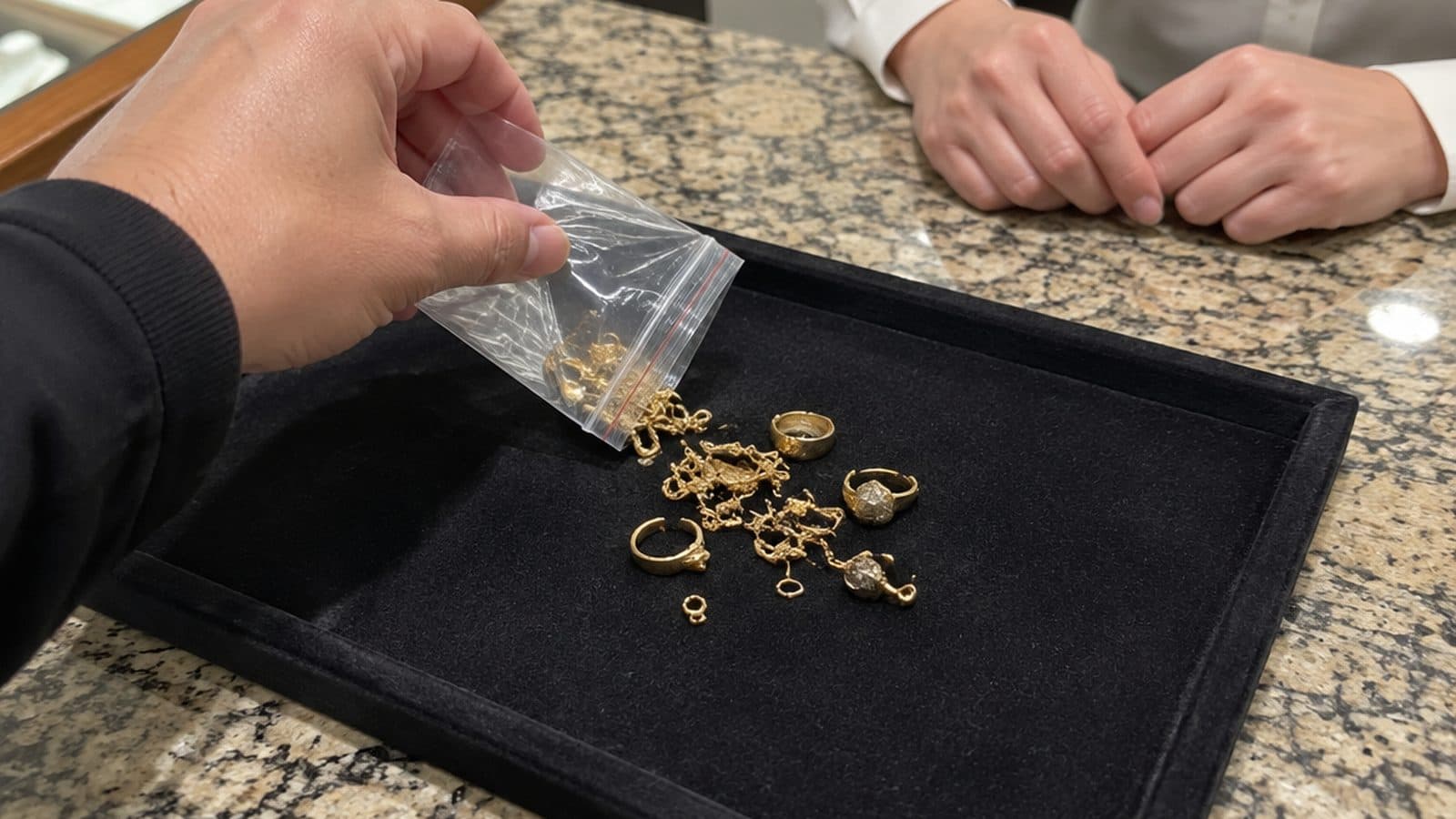
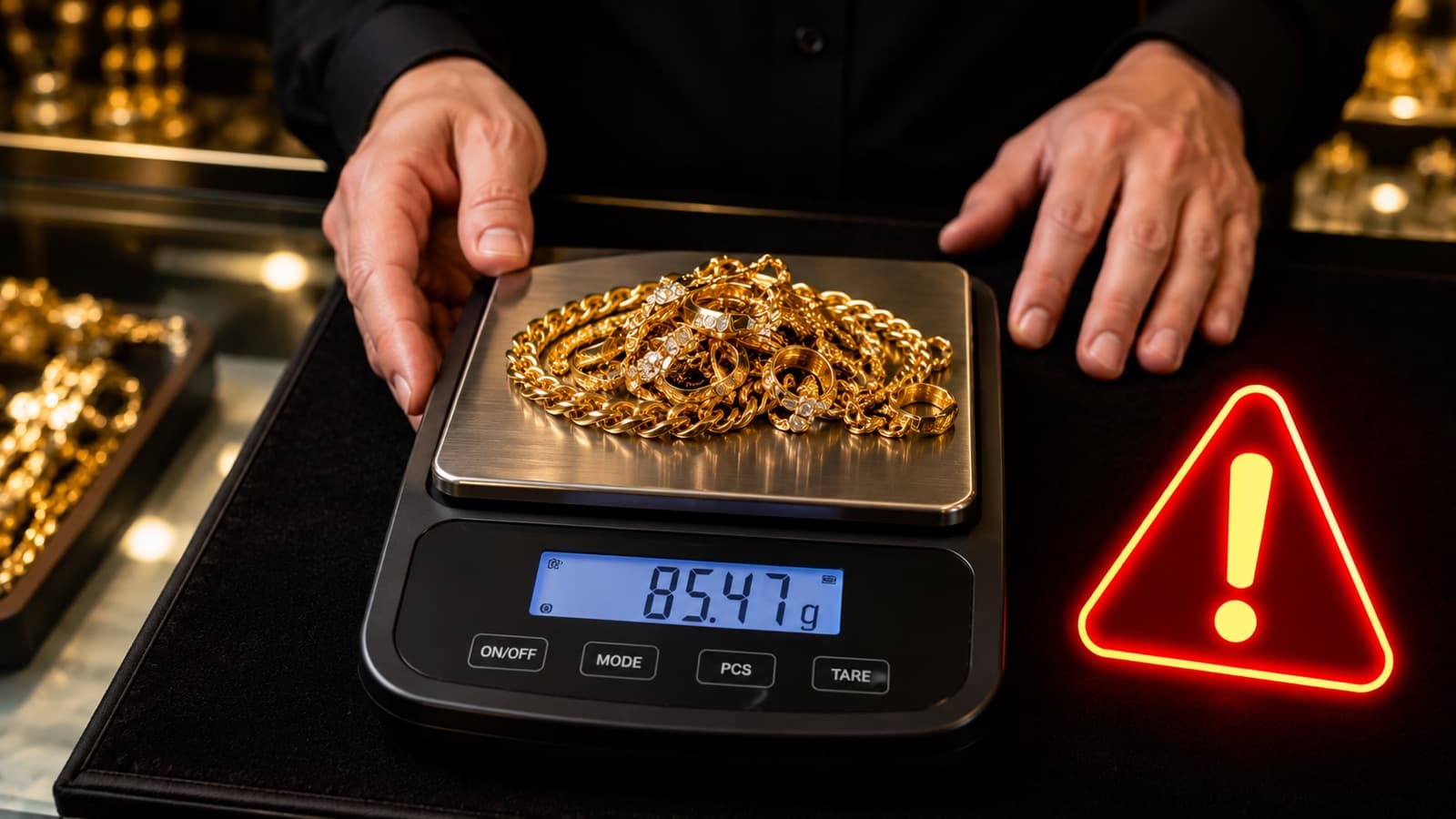
At any of our stores, everything is sorted, tested with an XRF analyzer, and weighed in front of you. Special pieces are set aside and looked at individually. You see the numbers and decide, with no fee and no pressure. If you accept, you are paid by check the same visit. If you'd rather think it over or talk to the family first, you take everything home.
We have four Northern Virginia stores: Chantilly, Annandale, and Manassas take walk-ins, and Vienna / Tysons is by appointment. For a large collection, calling ahead helps us set aside the time.
Frequently asked questions
Should I get an appraisal before selling inherited jewelry? For most collections, a buyer's free evaluation tells you what it will sell for. A formal written appraisal makes sense when you need a documented fair market value, for example to divide an estate or for tax records. Remember that an insurance appraisal states replacement cost, not resale value.
Do I pay taxes when I sell inherited jewelry or coins? An inheritance itself is not income. If you sell for more than the item's fair market value on the date of death, the difference is generally a taxable long-term gain. Selling soon after inheriting usually means little or no gain. Ask a tax professional about your case.
Can I sell jewelry from an estate before probate is finished? The executor or administrator is the one with authority over estate property, and in Virginia must qualify with the Circuit Court clerk first. If you're an heir rather than the executor, wait until the items have been distributed to you or the executor is handling the sale.
Is it better to sell an inherited collection all at once or piece by piece? Have it evaluated all at once so nothing special is missed, then decide. You can sell part and keep part. Pieces priced on metal content bring the same per gram whether sold together or separately.
Are old coins worth more than face value? Often. US dimes, quarters, and half dollars dated 1964 or earlier are 90% silver, silver dollars carry silver value, and scarce or high-grade coins can be worth more to collectors. Don't clean them before having them looked at.
What if family members disagree about selling? Get an itemized valuation first. Seeing a number next to each piece usually makes the conversation easier, and it lets heirs keep what matters to them while balancing the rest fairly.
Have an inherited collection to sort out? Read how we buy estate jewelry and coins, or visit a store for a free, no-obligation evaluation.